
Real photo or a character you design: which personalized book to choose (2026)
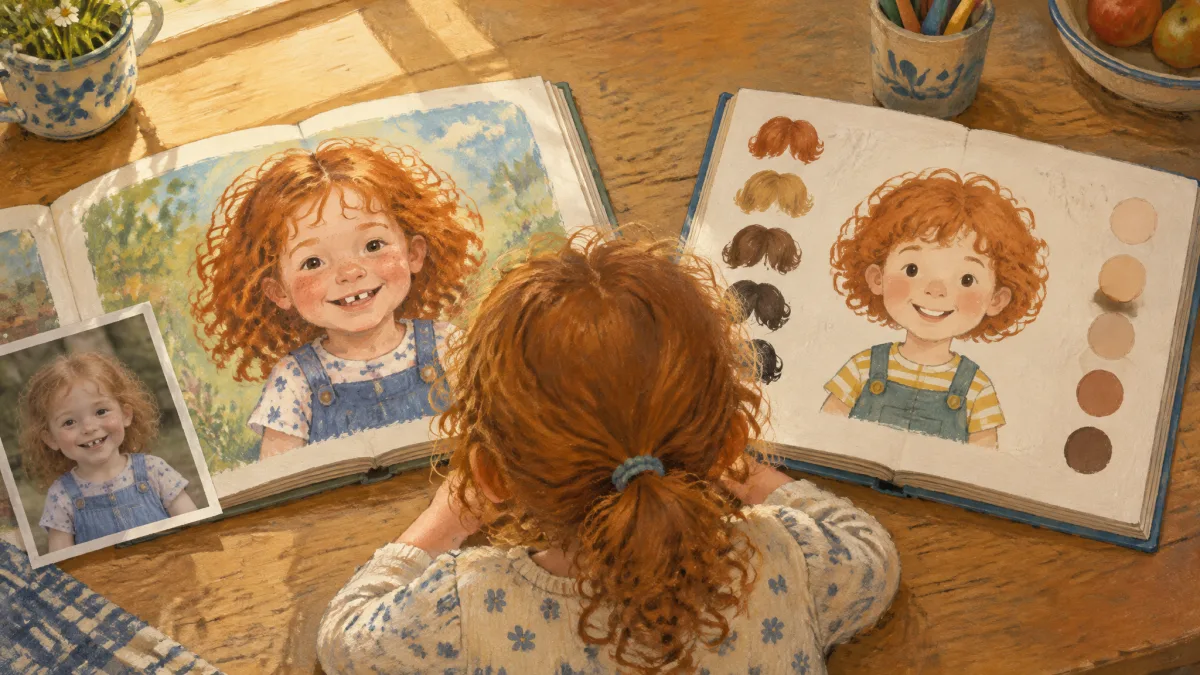
A personalized book shows your child in one of two ways: it starts from a real photo and redraws your child from it, or you design a drawn character by picking hair, skin tone, eyes and sometimes glasses. A photo-based book wins on recognition (your child sees their own face) and can bring siblings, parents and grandparents into the same story; a character you design needs no photo at all and is often previewable for free before you buy. Choose by what matters most to you: the likeness, or keeping your child's photo off a website.
A word before we start: Looma Stories makes photo-based books, so we are one of the brands in this comparison. Every fact about another brand links to that brand's own page, checked on 27 October 2026, so you can verify it yourself.
The two ways a book draws your child
From a photo. You upload one or more photos, and the book's illustrations show your child redrawn in its art style, page after page. Magic Story, Lullaby.ink, Story Spark, ToonyStory and Looma work this way. A close cousin is photomontage, where the face cut from the photo is pasted onto a drawn body; it looks quite different, so look at example pages before you order.
A character you design. You build a look-alike drawing from a menu of options: skin tone, hair color and style, eye color, sometimes glasses or freckles. No photo is needed. Wonderbly, Librio and Hooray Heroes work this way, each with its own set of options.
Both are honest ways to make a child the hero. They simply answer different wishes.
What each approach gives your child
Recognition. This is the big difference. In a photo-based book, a child points at the page and says "that's me" because it is their face, their hair, their missing tooth. A character you design is a likeness by category: the right hair color and skin tone, but a face shared by every child who picked the same options. Many children are still delighted by it, especially when their name is on every page.
Likeness over the whole book. For photo-based books, the question to ask is whether your child looks the same on every page. Ask for, or flip through, a full example book rather than a single cover. For designed characters, consistency is built in: the same drawing of the character is used throughout the book.
Illustration style. Builder books are drawn in the brand's own house style, often lovely and very polished. Among photo-based services, some draw in a single style and others offer a choice (ToonyStory and Looma, for example), so the same child can look like a classic picture book or an animated film.
Who else is in the story. Photo-based books can often add siblings, parents, grandparents or the family dog, each drawn from their own photo, though not every brand allows siblings to share a book. Builder books focus on one child per title, with separate titles for two children or family setups.
Story freedom. Builder books follow a story written in advance by the brand, the same for every child who orders that title. Some photo-based services also work from a library of titles; others let you describe your own story idea. If you want the story built around your child's world, check that point brand by brand.
Eight brands side by side: what a parent sees
Checked on 27 October 2026 on each brand's own pages. Where a page does not state a fact, the table says so rather than guess. No prices here: they change often and depend on format and shipping, so compare them on each site on the day you order.
| Brand | How your child's look is set | Others in the book | What you see before paying | The photo, as the brand states it |
|---|---|---|---|---|
| Magic Story | From a photo: you upload it, pick the eye color and enter the name | One child per book, siblings cannot appear together; a parent, grandparent or pet on selected titles | A free preview of your child's character | The original photo is not saved, the illustrated character is; not used to train AI models |
| Lullaby.ink | From photos turned into illustrated storybook characters | Up to 4 family members, siblings or pets in one story | A free preview, no card needed | Used only to generate the story; kept while the account is active; deleted on request |
| Story Spark | From a photo of a child, parent, grandparent, pet or toy | Parents, grandparents, pets or toys, each from a photo | The complete book, page by page, before ordering a print | Kept while the account is active; deletion on request; its AI providers may not train general models on it |
| ToonyStory | From photos used as a reference for a consistent character | 2 characters on the free plan, more on paid plans | The whole book, free, no card needed | Kept while the account is active; deleting a character removes its photos; never used to train AI models |
| Looma Stories | From a photo of each character, in one of 9 art styles, adjustable in a few words | Up to 5 characters, 3 of them main: siblings, parents, grandparents, the dog | The ebook is paid first, then you read the whole book, change any word and redraw up to 12 pictures | Used only to create and review the book; not used for marketing or AI training without explicit permission; deleted no later than 12 weeks after the book is created |
| Wonderbly (Lost My Name) | A character you choose: three preset characters for a boy or a girl, then natural hair and skin tone options | One child; you can add a special photo to the book | All 22 pages before buying | No photo needed for the hero |
| Librio (The Tree, the Key and Me) | A character you design: gender, skin tone, eye color, hair color and style, optional glasses | One child in this title | The whole book before buying | No photo needed |
| Hooray Heroes | A character you design: skin tone, hair style and color, eye shape and color, optional glasses and freckles | Depends on the title | Not stated on the pages checked | No photo needed |
Sources: Magic Story preview help, siblings help and privacy policy; Lullaby.ink home page and privacy policy; Story Spark FAQ and privacy policy; ToonyStory FAQ, pricing page and privacy policy; Wonderbly Lost My Name page; Librio book page; Hooray Heroes home page.
What happens to your child's photo
If privacy is your first concern, a character you design settles it: nothing about your child's face leaves your phone. If you choose a photo-based book, read the brand's privacy page before uploading and look for four answers.
- Is the original photo kept? Some brands keep only the illustrated character; others keep the photo too.
- For how long? "As long as your account is active" means until you close it. A fixed deadline means it goes even if you forget.
- How is it deleted? Automatically, by deleting the character yourself, or by writing to support.
- Is it used to train AI models? Look for a plain "no", or a "no" unless you give explicit permission.
One practical habit helps whatever the brand: upload a plain, recent photo of your child's face rather than one showing your home, a school uniform or your street.
Which approach suits which age
Under 2. Most toddlers start to recognize themselves in mirrors and photographs between 18 and 24 months (LibreTexts, Development of the Self). Before that, the book is mostly for you, and the faces a baby knows best are yours. A photo-based book that brings in parents, grandparents or an older sibling uses that.
From 2 to 6. This is where recognition pays off in our experience: children point at themselves, at their big brother, at Grandpa, and ask for the book again. Likeness and the people around the child count more than plot twists.
From 7. Older children notice style and story more. Some love designing their own character, which becomes part of the fun; others want to see themselves drawn as the hero of a real adventure. Ask them, and let them pick the art style.
How to decide
- You want your child to recognize their own face: choose a photo-based book, and check a full example book for consistency.
- You would rather not upload any photo: choose a character you design.
- You want siblings or grandparents in the same story: choose a photo-based brand that allows several characters, and check that siblings can share one book.
- You want to read every page before you pay anything: builder books such as Wonderbly and Librio show the whole book first, and some photo-based services do too.
- You want a story built around your child's own world: look for a service where you describe the story idea yourself, not only pick a title.
- You love a particular illustration style: builder brands draw in their house style; some photo-based services let you choose.
For a wider checklist (format, delivery, languages, writing quality), see our guide on how to choose a personalized children's book.
Where Looma fits
We make photo-based books, so take this paragraph for what it is. At Looma, each character is drawn from their own photo (a sharp photo where only that person is visible, looking at the camera), in one of 9 art styles, and stays the same across all 36 pages. Up to five characters can join: the hero plus four others, such as siblings, parents, grandparents or the family dog. You describe your own story idea or start from a guided theme. The ebook is paid for first; then you read the whole book, change any word, redraw up to 12 pictures and adjust a character in a few words (green eyes, shorter hair) before the final version. The photos are used only to create and review the book and are deleted no later than 12 weeks after it is created; from then on the book can no longer be edited, but it stays in your account to read, download and print. You can see how it looks on our page about the book drawn from your child's photo, or create one in a few minutes.
Looma in 1 minute
FAQ: what parents ask
Is a photo-based personalized book safe for my child's photo?
It depends on the brand's policy, so read it before uploading. Check whether the original photo is kept, for how long, how it is deleted and whether it is used to train AI models. If you would rather share no photo at all, a character you design needs none.
Does a character you design look like my child?
It matches your choices: skin tone, hair, eyes and sometimes glasses or freckles. It does not reproduce your child's face, so it looks like many children with the same options. Plenty of children still love it, especially with their name on every page.
Which is better for a toddler?
Toddlers usually start recognizing themselves in photographs between 18 and 24 months, and they recognize their parents long before that. A photo-based book with the family in it plays on both; a designed character works well too if the story is short and the name is read aloud.
Can siblings be in the same personalized book?
With some brands, yes. Lullaby.ink allows up to four family members, siblings or pets in one story, and Looma up to five characters in total. Magic Story's help center says siblings cannot appear together, and builder brands usually sell separate titles for two children.